Evidence-based policymaking: a review
Abstract
The process of facilitating the uptake of evidence, for example, scientific research findings, into the policymaking process is multifaceted and thus complex. It is therefore important for scientists to understand this process in order to influence it more effectively. Similarly, policymakers need to understand the complexities of the scientific process to improve their interaction with the scientific sphere. This literature review addresses those factors that influence the uptake of scientific evidence into policymaking, the barriers to using science in policymaking, as well as recommendations for improved science-policymaking interaction. A visual diagram of the gears of a car is used to convey the message of the complexities around the engagement between science and policymaking. It is concluded that the issue of evidence-based policymaking remains unresolved and questions for future research on the science-policy interface are raised.
evidence-based policy; evidence uptake; policymaking; political decision-making; rational policymaking; science-policy interface
INTRODUCTION
The lack of scientific evidence in policymaking is evident and can, to some extent, be attributed to the complicated nature of translating scientific (and other forms of) evidence into policy.1,2,3,4
In theory, evidence based policy making should work well. Scientists produce evidence, which policy makers then use for decisions. In return, policy makers provide scientists with evidence requirements and resources for research. This approach has an intuitive, common sense logic.5
However, in practice, several problems characterise the relationship between scientists and policymakers due to mutual scepticism and differences that exist between them.5
What is evidence?
Evidence can be made up of a range of components - not only scientific6,7,8 - and is never used in isolation.910,11 However, evidence also includes economic, attitudinal, behavioural and anecdotal evidence,10126,9,10,11,13
Evidence based on scientific research is thus combined with other forms of information to provide evidence for policy development and practice. Combining different forms of evidence creates and acknowledges the context within which knowledge exists and within which it is understood.122,14 and decision-makers and policymakers will source information with a particular agenda in mind.15
Why is evidence important for policymaking?
'Policies based on evidence ... [are] likely to be better informed, more effective and less expensive' than policies formulated through ordinary time-constrained and politically constrained processes without evidence input.10 101
THE POLITICAL DECISION-MAKING PROCESS
Scientific findings are one example of a range of sources of evidence and influencing factors that shape policymakers' decisions and actions. It is therefore important that scientists understand the decision-making process as it links to policymaking, how evidence can feed into the process, as well as what barriers to the uptake of evidence exist. Such an understanding will enable scientists to develop strategies to influence decision-making more effectively. Conversely, it is also crucial that policymakers make an effort to understand the complexities of the scientific process and how it differs from the policy process, to be able to engage with scientists more effectively.
The process by which science influences policymaking can take many forms. Mitchell16Box 1). Secondly, scientific evidence is provided, showing decision-makers the 'impacts of their behaviours' and resulting in the changed behaviour of decision-makers and, thirdly, scientific evidence first has to convince policymakers that there is a problem (this can be a lengthy process).
The first two short causal chains as described above are the exception and apply where the policy question is fairly well-structured and the answer can be known with certainty or, at least, with a reasonable degree of certainty.18,19,20 In most cases, the influence of science on policy is less direct.161621
Despite the availability of guidelines on how to use science in policy, scientists and policymakers often feel frustrated, because clearly presented and robust evidence does not always have the desired effect on policy processes.11,14,22,23,24,25 Policymakers often have to respond rapidly to badly structured yet challenging problems.261826
The uptake of (scientific) evidence: Factors influencing decision-making
Several factors influence the decision-making process. These include, (1) organisational factors such as structure, function and composition, (2) socio-economic contexts,2271628229
Both individual and organisational factors have an influence on the uptake of evidence in decision-making processes, which is why compatibility of new evidence with the values and belief systems of both is important. The 'personal qualities and capacities' of the decision-maker, such as values and beliefs, leadership, knowledge and skills, resources, partnership links and networking skills, all play a crucial role in the uptake of evidence.22,27
Barriers to using science in policymaking: The science-policy divide
Despite the intuitive link between science and policy, there are many barriers and divides between politicians and scientists that need to be overcome before effective interaction and inclusion of evidence in policy can take place.
Differing worlds and world views (mental models), cultures, goals and rewards
Scientists and policymakers have different mental models (or differing forms of cultural relevance) that form and regulate the way they see, understand and experience the world and subsequently the way they behave.30,31,32
This does not imply that people with different mental models cannot communicate. Scientists must just be aware that, when communicating environmental information to [policymakers], a deliberate effort is required to ensure that the message is conveyed accurately, since people's interpretation of a piece of information may differ, and their resulting responses may be entirely the opposite to what was anticipated.31
Apart from differing world views, the career structures, cultures and goals of scientists and policymakers also differ,33345333333
Accountability and vested interests
Scientists are accountable to their funding organisations and editors of peer-reviewed journals. Policymakers need to answer to government, taxpayers and political parties.5
In setting the agenda for scientific research, governments are increasingly responsible for determining research funding priorities and thus influence the way funding is allocated, placing pressure on scientists to comply with government views.5,8 Scientific research could also reflect the bias of other sponsors.2735
Poor communication and lack of engagement
The 'role of science communication is gaining prominence' in South Africa and internationally.313,9 and is aggravated by scientific evidence having limited relevance to current policy problems, as well as by policymakers insisting on exact answers, even when these are not contained in available evidence.3637389,39
Poor communication between policymakers and scientists is worsened by several obstacles to the communication process. These include:
• The inadequate dissemination of scientific research findings,9,39 which is worsened by a lack of funding for this purpose.540
• The failure of scientists to relate to the decision-making context419,40 which both result in uncertainty and an inability to express policy needs sufficiently.41
• The reservations of policymakers about the use of science,99
• Organisational constraints419
• The media's efforts to report a balanced view, which often distorts facts and evidence. A scientific community (as in the case of global warming) often finds itself pitted against some contrarian or non peer-reviewed article in the media. The 'resulting arguments actively hinder people's ability to reach a sound understanding' of the topic at hand.13
Uncertainty, credibility and risk
Scientists are often sceptical about how policymakers employ science, when, for example, it is used to further certain political agendas or ideologies.5,42 Policymakers would rather make uninformed decisions than admit knowledge gaps that could 'reduce support for their programmes'.595
Both the credibility of the information and the credibility of the scientist influence communication between policymakers and scientists. Credibility of information is based on 'expertise and trustworthiness',163116432843
Risk is embedded in cultural/social issues and cannot be 'overcome simply by the application of more and better science'.13,44 All forms of risk are associated with a spectrum of questions, fears, uncertainties and mistrust that cannot be dealt with by providing scientific probabilities. Fears associated with risk require debate and conversation about alternatives and solutions.139,13
Pace, timing and time-frames
Science is a slow cumulative process compared to the response times and compromises allowed for policymaking.5,33,45,46 In contrast to the rigorous, rational and well-planned scientific process,13,47 the policy world is fast-paced and unpredictable,475,13,33
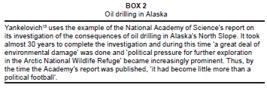
Very often, scientific advice and answers are not synchronised with the needs of decision-makers and politicians, which results in the dismissal of seemingly appropriate policy responses.273933Box 2) and this is in conflict with the short-term needs of policymakers, who need to apply such knowledge within much shorter time frames (often months and years).13,27,39
Although scientific research can be responsive in the longer term, it is, by nature, not a reactive process5,33 and can therefore be 'uncomfortably ahead of contemporary political agendas'.39
Knowledge and power
'Scientists are the owners of knowledge' and 'policy officers are the custodians of power'.3333333333
Perceptions that scientific knowledge, through science education and the promotion of a more scientific way of thinking, can close the science-society gap tend to place science in a morally and intellectually superior position,13Box 2).9,27,48
WHAT TURNS THE 'WHEELS' OF THE POLICYMAKING PROCESS?
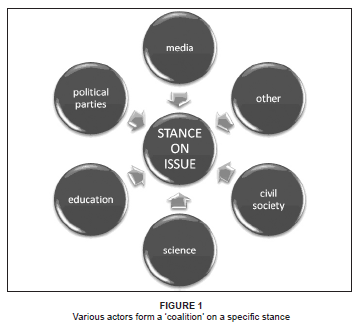
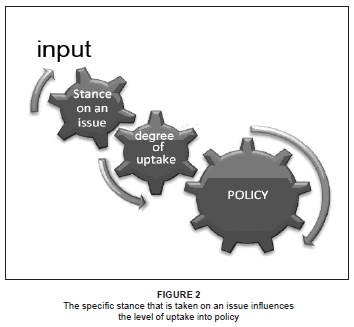
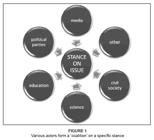
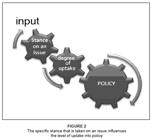
Every contentious issue is influenced by the stances that are taken by the specific controlling actors on that issue. Using HIV/AIDS in South Africa as an example, the pro-anti-retroviral dissemination view is one stance on the issue and the 'there is no HIV/AIDS pandemic' view, is another. A number of actors, each with their own interests, build each stance and form a 'coalition' (Figure 1). This stance, depending on various factors, may be adopted into the policy process (Figure 2).
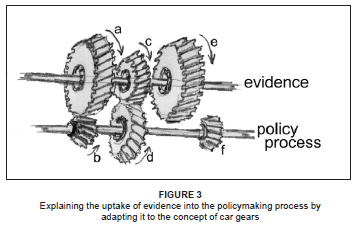
Borrowing from the concept of car gears, we attempt to explain the intricacy and complex nature of the degree to which evidence may be taken up in the policy process (Figure 3). The input to the policymaking process can be considerable: a large gear (a), which can be compared to a car's first gear, turns the policymaking shaft by turning the corresponding small gear (b). Supplying evidence that is of value, but which does not completely address policy needs (i.e. evidence that is not completely usable) makes the gears turn slowly but surely, and in a cumbersome way, resulting in an eventual contribution to the policy end result. The input to the policymaking process can also be smaller but more powerful, particularly if it is more directed towards meeting policy needs or usable outcomes - (c) compared to (a) - and this can result in a far more significant effect on the policymaking process (d). However, in some instances, regardless of how 'good' the evidence is (e), it does not affect the policymaking process (f) at all, either because the evidence does not address policy needs or is not usable.
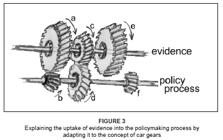
Each of the recommendations below has an input or effort ('gear size') that is needed to achieve results. Similarly, the result or influence on policymaking can be either large or small.
RECOMMENDATIONS FOR IMPROVED SCIENCE-POLICYMAKING INTERACTION
Values and evidence
Decision-making is a 'highly value-laden' process and sound science alone is not sufficient to inform it.21611,23,25,49,50,51 They also need to understand how science is turned into common knowledge, as well as the value systems that play a role in this transformation of knowledge from the 'scientific' to the 'common'.6
In the process of translating scientific research findings to common knowledge for use in policymaking, the supplier of the information is influenced by personal values6
Understanding the political decision-making process, as well as the underlying values, will help scientists to form an idea of the usefulness of certain findings.6
Usable knowledge
Knowledge is useful when it is relevant to the current policy or legislative need.5,9,14,33 Useful knowledge satisfies certain value demands of decision-makers and can be a desired situation, object or condition during interaction between people.2323,52,53 and 'improves environmental decision-making by expanding alternatives, clarifying choice and enabling decision-makers to achieve desired outcomes'.23
The political and institutional context needs to be aligned with the scientific findings that are to be used. The bigger picture should be taken into account56Box 1. An integrated and broad information base is also less likely to be biased by either a funding organisation or a political sponsor.2754
The best, or most useful, scientific knowledge will have no effect on policymaking if it does not also contain a successful mechanism of transfer to policymakers.27
Communication and engagement Understanding the decision-making process
Over the past few years, there has been a shift in the policymaking arena that has resulted in a change in the way the policymaking community perceives scientific evidence, as well as the re-evaluation of the role of evidence in policymaking.5555
A good understanding of the intricacies of the political process is needed in order to know at which stages the relevant evidence should be brought forth.1423,33,39 Concise packaging of the relevant information is thus needed.3,5
However, the responsibility does not lie with scientists alone. Successful dialogue between scientists and policymakers also requires that policymakers obtain higher levels of scientific understanding.5954
Relationships across boundaries
Decision-makers and scientists should work together to form policymaking communities.5623Boxes 3 and 4. The government-science interface determines the degree to which science and technology form the basis of the political economy, as well as the extent to which science informs decision-making and policymaking at the government level.58
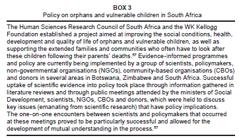
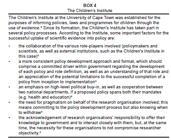
'Attempted partnerships between policy and science often fail because of lack of mutual respect caused by lack of cultural awareness'.33333333Box 5).
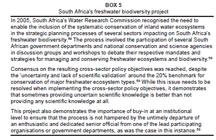
Often an intermediary who knows, understands and engages with the 'audiences' (the key stakeholders) involved in policymaking is needed.51,60 Lomas62561,62 While all three facilitating roles focus on getting the message across, the role of a knowledge broker is to bring scientists and decision-makers together and facilitate interaction between them.63
It appears that, in developing countries, personal relationships are a particularly important factor in the uptake of scientific evidence into policy.9459,49 However, should such a relationship end, the process is disrupted and often comes to a complete standstill (see Box 5).
Scientists can also join networks or 'epistemic communities'164656465
In order for decision-making processes to be effective and transparent all relevant stakeholders should be involved.215823,53
The role the media plays in the 'science-society interface'
A more informed and engaged public will stimulate policy dialogues, promote inputs into policy development and benefit policymaking. A stronger 'science-society interface',5896654,67 Such measures will ensure that public concerns are taken into account when decisions are made on science-based issues.54
It is in the context of this interface that the media tends to play an extremely important role in knowledge transfer, primarily to the public,31
Essentially, the media has three roles to play in this interface. Firstly, it reports on and critiques issues of policy and science, as well as the relationship between, or the decisions of, the two actors. Secondly, it should report on the public response to, and perceptions of, various science-policy issues. Thirdly, as Yankelovich1368
Taking part in the process
Scientific research is a process and not a product and, similarly, policymaking is a process and not an event.66Box 1).3,6,28,39 Simultaneously, scientists need to be more involved in the policymaking process - interpreting the meaning of scientific evidence,9,11 as well as in interactive knowledge brokering.2556,69 Stewart703333
Framing the scientific evidence: Wording, shaping, contextualising and packaging information
In order for scientific information to be useful, it has to be presented in a way that is neither ambiguous nor overly complex. It also has to be 'compatible with existing planning models'.2849
Framing needs to be done in such a way that scientific information can be incorporated into the understanding of official policymakers, as well as civil society actors.1616
Of equal importance is the dissemination of the scientific information - effective dissemination strategies should therefore be developed and implemented.49,71 From a practical perspective, individuals and organisations responsible for the commissioning and funding of scientific research projects should encourage dissemination and publication of results and findings.7273,74
The institutional context
Managing the policymaking process (strategies, mechanisms and conditions) has several pitfalls. For example, involving the best qualified scientists to enhance the credibility of the process might undermine its legitimacy and salience, due to concerns about the potential lack of political and economic representation. However, if non-scientists are brought on board to enhance legitimacy or salience, this can undermine credibility with other audiences.1616
Other important qualities that should characterise the policymaking process are openness towards learning, as well as self-reflection.169,75 Scientific research should be of local relevance and demonstrate social impact. If science is, to some extent, informed by policy then the reverse should be true for policy as well.75
CONCLUSION
In this paper, we have sought to explore the barriers or obstacles to evidence-based policymaking by reviewing and summarising existing literature on the topic. This has been done with the aim of identifying solutions and facilitating the practical improvement of evidence-based policymaking.
In light of this literature review, a number of points have arisen. Firstly, over the last decade, a large body of literature from both academic and policy environments has emerged around the issues of evidence-based policymaking and how to address the challenges that characterise this process. Secondly, within existing literature on this topic, there is a fairly high level of overlap and agreement in terms of basic recommendations regarding how to improve the uptake of evidence within policymaking arenas. These recommendations predominantly focus on the role of scientists and policymakers as two groups of actors engaging in a one-on-one relationship and, as such, do not necessarily always take into account the myriad of other influences, actors, issues and perceptions that affect and impact the process of evidence-based policymaking, nor the intricate and complex nature of the context within which the process is situated. Thirdly, the continuing lack of policy that is based on sound evidence, as well as the ongoing debate around this issue, is indicative of the fact that this issue is far from being resolved. The South African River Health Programme is an example of where the scientific information was targeted at policymakers and communicated effectively, yet still did not result in the uptake of the information.31976
These five concluding observations allow us to discern an agenda for further research in this field. These ideas are laid out below in the form of a number of questions that remain to be considered:
• Firstly, why are existing recommendations, by and large, not yielding sufficiently effective results within science and policymaking communities? Important issues to consider in this regard are, (1) the impact of positioning evidence-based policymaking thinking within a positivist paradigm, (2) the linearity or non-linearity of the relationship between policymakers and scientists and (3) the context and intricate relationships at play between policymakers, scientists and civil society within the policymaking process.
• Secondly, why do some policy issues seem to respond to sound evidence whilst others do not? Notions of power, politics and influence all require careful consideration in this regard.
• Thirdly, do evidence-based policy issues function in the same way in developing countries as they do in more mature democracies? What effect does a lack of evidence have on this process? Answering these questions, which requires a clear understanding of the uniqueness of a developing world context, is critical to moving to a place where relevant and impactful recommendations can be made regarding the improvement of evidence uptake in South Africa.
These are all issues that require careful consideration, but which are beyond the scope of this paper. However, in order to make progress in this field in future, it has become crucial to move beyond objective and somewhat removed recommendations about how to improve evidence uptake into policy, to a place where deep, real and nuanced understandings of the context in which policy decisions are made can be reached.
REFERENCES
- 1. Hanney SR, Gonzalez-Block MA, Buxton MJ, Kogan M. The utilisation of health research in policy-making: Concepts, examples and methods of assessment. Health Res Policy Syst. 2003;1:2.
-
2. Bowen S, Zwi AB. Pathways to 'evidence-informed' policy and practice: A framework for action. Policy Forum [serial online]. 2005 [cited 2008 Oct 27]; 2:e166. Available from: http://www.plosmedicine.org/
» http://www.plosmedicine.org/ - 3. Mubyasi GM, Gonzalez-Block MA. Research influence on antimalarial drug policy change in Tanzania: Case study of replacing chloroquine with sulfadoxine-pyrimethamine as the first-line drug. Malar J. 2005;4:51.
- 4. Shung-King M. The ebb and flow of child health policy development in South Africa: Three case studies reflecting the role of the Children's Institute at the University of Cape Town in shaping child health policy in South Africa. Cape Town: Children's Institute, University of Cape Town, 2006; p. 44.
- 5. Choi BCK, Pang T, Lin V, et al. Can scientists and policy makers work together? J Epidemiol Community Health. 2005;59:632-637.
- 6. Lomas J. Using 'linkage and exchange' to move research into policy at a Canadian foundation. Health Aff. 2000;19:236-240.
- 7. Solesbury W. Evidence based policy: Whence it came and where it's going? ESRC UK Centre for Evidence Based Policy and Practice: Working paper 1. London: University of London; 2001.
- 8. Zussman D. Evidence-based policy making: Some observations of recent Canadian experience. Soc Pol J New Zeal. 2003;20:64-71.
- 9. Jones N, Jones H, Walsh C. Political science? Strengthening science-policy dialogue in developing countries. Working paper 294. London: Overseas Development Institute (ODI); 2008.
- 10. Campbell S, Benita S, Coates E, Davies P, Penn G. Analysis for policy: Evidence-based policy in practice. London: Government Social Research Unit; 2007.
- 11. Wilson DC, Smith NA, Blakey NC, Shaxson L. Using research-based knowledge to underpin waste and resources policy. Waste Manag Res. 2007;25:247-256.
- 12. Juntti M, Russel D, Turnpenny J. Evidence, politics and power in public policy for the environment. Environ Sci Policy. 2009;12(3):207-215.
- 13. Yankelovich D. Winning greater influence for science. Issues Sci Technol. 2003;XIX(4):7-11.
- 14. Young J. The impact of research on policy and practice. Capacity.org [serial online]. 2008 [cited 2010 May 11]; 35:4-7. Available from: http://www.capacity.org/en/journal/feature/impact_of_research_on_policy_and_practice
- 15. Cookson R. Evidence-based policy making in health care: What it is and what it isn't. J Health Serv Res Policy. 2005;10:118-121.
- 16. Mitchell RB, Clark WC, Cash DW, Alcock F. Science, scientists, and the policy process: Lessons from global environmental assessments for the Northwest Forest. In: Arabas K, Bowersox J, editors. Forest futures: Science, politics and policy for the next century. Lanham: Rowman & Littlefield, 2004; p. 95-111.
- 17. Scholes RJ, Mennell KG, editors. Elephant management: A scientific assessment for South Africa. Johannesburg: Wits University Press; 2008.
- 18. Hisschemöller M, Hoppé R. Coping with intractable controversies: The case for problem structuring in policy design and analysis. In: Hisschemöller M, Hoppé R, Dunn WN, Ravetz JR, editors. Knowledge, power and participation in environmental policy analysis and risk assessment. New Brunswick: Transaction Publishers, 2001; p. 47-72.
- 19. Snowden DJ, Boone ME. A leader's guide to decision-making. Harvard Business Review November 2007. Rev. ed. Boston: Harvard University Press; 2007.
- 20. Shaxson L. Who's sitting on Dali's sofa? Evidence-based policy-making. A Public Management and Policy Association (PMPA)/National School of Government practitioner exchange report. London: PMPA; 2008.
- 21. Watson RT. Turning science into policy: Challenges and experiences from the science-policy interface. Philos Trans R Soc Lond B Biol Sci. 2005;360:471-477.
-
22. Environment Research Funders' Forum (ERFF). Using research to inform policy: The role of interpretation. ERFF report no. 3, August 2007 [document on the Internet]. Swindon: ERFF; c2007 [cited 2008 Jan 5]. Available from: http://www.erff.org.uk/reports/reports/reportdocs/interpretstudy070919.pdf
» http://www.erff.org.uk/reports/reports/reportdocs/interpretstudy070919.pdf - 23. McNie E. Reconciling the supply of scientific information with user demands: An analysis of the problem and review of the literature. Environ Sci Policy. 2007;10:17-38.
- 24. Nutley SM, Walter W, Davies HTO. Using evidence: How research can inform public services. Bristol: The Policy Press; 2007.
- 25. Bielak A, Campbell A, Pope S, Schaefer K, Shaxson L. From science communication to knowledge brokering: The shift from 'science push' to 'policy pull'. In: Cheng D, Claessens M, Gascoigne T, Metcalfe J, Schiele B, Shi S, editors. Communicating science in social contexts: New models, new practices. Dordrecht: Springer, 2008; p. 201-226.
- 26. Turnhout E, Hisschemöller M, Eijsackers H. Ecological indicators: Between the two fires of science and policy. Ecol Indic. 2007;7:217-228.
- 27. Haas PM. When does power listen to truth? A constructivist approach to the policy process. J Eur Public Policy. 2004;11:569-592.
- 28. Roux DJ, Rogers KH, Biggs HC, Ashton PJ, Sergeant A. Bridging the science-management divide: Moving from unidirectional knowledge transfer to knowledge interfacing and sharing. Ecol Soc. [serial online]. 2006 [cited 2009 April 6]; 11:4. Available from: http://www.ecologyandsociety.org/vol11/iss1/art4/
- 29. Cloete F, Wissink H, De Coning C. Improving public policy from theory to practice. 2nd ed. Pretoria: Van Schaik Publishers, 2006; p. 366.
- 30. Limoges C. Expert knowledge and decision-making in controversy contexts. Public Underst Sci. 1993;2:417-426.
- 31. Strydom WF, Hill L, Eloff E. The role of communication in governance: The River Health Programme as a case study. In: Turton AR, Hattingh J, Maree GA, Roux DJ, Claassen M, Strydom WF, editors. Governance as a trialogue: Government-society-science in transition. Berlin: Springer-Verlag, 2007; p. 281-304.
- 32. Pohl C. From science to policy through transdisciplinary research. Environ Sci Policy. 2008;2:46-53.
- 33. Briggs SV. Integrating policy and science in natural resources: Why so difficult? Ecol Manage Restor. 2006;7:37-39.
- 34. European Commission. Scientific evidence for policy making. Directorate General for Research, Socioeconomic Sciences and Humanities. EUR 22982 EN. Brussels: European Commission, 2008; p. 36.
- 35. Rosenstock L, Lee LJ. Attacks on science: The risks to evidence-based policy. Am J Public Health. 2002;92:14-18.
-
36. HM Government. Guidelines on scientific analysis in policy-making [document on the Internet]. c2005 [cited 2008 July 1]. Available from http://www.berr.gov.uk/files/file9767.pdf
» http://www.berr.gov.uk/files/file9767.pdf - 37. Raffensperger C, DeFur PL. Implementing the precautionary principle: Rigorous science and solid ethics. Hum Ecol Risk Assess. 1999;5:933-941.
- 38. Glasgow RE, Emmons KM. How can we increase translation of research into practice? Types of evidence needed. Annu Rev Public Health. 2007;28:413-433.
- 39. Owens S, Petts J, Bulkeley H. Boundary work: Knowledge, policy and the urban environment. Environ Plann C Gov Policy. 2006;24:633-643.
- 40. Jewell CJ, Bero LA. 'Developing good taste in evidence': Facilitators of and hindrances to evidence-informed health policymaking in state government. Milbank Q. 2008;86(2):177-208.
- 41. Eppler M. Knowledge communication problems between experts and decision makers: An overview and classification. Electron J Knowl Manag. 2007;5:291-300.
- 42. Wolfe R, Behague D. Improving evidence-based policymaking in maternal and neonatal health. Strategies for researchers and policymakers. Briefing paper 1. London: Department for International Development; 2008.
- 43. Rogers EM. Diffusion of innovations. New York: The Free Press; 1995.
- 44. Jamieson D. Scientific uncertainty and the political process. Ann Am Acad Pol Soc Sci. 1996;545:35-43.
- 45. Harries U, Elliot H, Higgins A. Evidence based policy-making in the NHS: Exploring the interface between research and the commissioning process. J Public Health Med. 1999;21:29-36.
- 46. Jones N, Walsh C. Policy briefs as a communication tool for development research. ODI background note. London: ODI; 2008.
- 47. Lavis J. Research, public policymaking, and knowledge translation processes: Canadian efforts to build bridges. J Contin Educ Health Prof. 2006;26:37-45.
- 48. Parsons W. From muddling through to muddling up - Evidence based policy making and the modernisation of British Government. Public Policy Adm. 2002;17:43-60.
- 49. Crewe E, Young J. Bridging research and policy: Context, evidence and links. Working paper 173. London: ODI; 2002.
- 50. Jacobs K, Garfin G, Lenart M. More than just talk: Connecting science and decisionmaking. Environment. 2005;47:7-21.
-
51. Reardon R, Lavis J, Gibson J. From research to practice: A knowledge transfer planning guide. Toronto: Institute for Work & Health; 2006 [cited 2009 March 11]. Available from: http://www.iwh.on.ca/kte/images/
» http://www.iwh.on.ca/kte/images/ - 52. Cash D, Clark W. From science to policy: Assessing the assessment process. John F. Kennedy School of Government Harvard University Faculty Research working papers series, November, RWP01-045. Cambridge: Harvard University; 2001.
- 53. Cash D, Clark W, Alcock F, Dickson N, Eckley N, Jäger J. Salience, credibility, legitimacy and boundaries: Linking research, assessment and decision making. John F. Kennedy School of Government Harvard University Faculty Research working papers series, November, RWP02-046. Cambridge: Harvard University; 2002.
- 54. Government of Canada. A framework for science and technology advice: Principles and guidelines for the effective use of science and technology advice in government decision making. Ottawa: Government of Canada; no date.
- 55. Lawrence R. Research dissemination: Actively bringing the research and policy worlds together. Evid Policy. 2006;2:373-384.
- 56. Allen P, Peckham S, Anderson S, Goodwin N. Commissioning research that is used: The experience of the NHS Service Delivery and Organization Research and Development Programme. Evid Policy. 2007;3:119-134.
- 57. Shisana O, Louw J. Translating research into policy: The case of orphans and vulnerable children in South Africa. SAHARA J. 2006;3(2):450-456.
- 58. Turton AR, Hattingh HJ, Claassen M, Roux DJ, Ashton PJ. Towards a model for ecosystem governance: An integrated water resource management example. In: Turton AR, Hattingh J, Maree GA, Roux DJ, Claassen M, Strydom WF, editors. Governance as a trialogue: Government-society-science in transition. Berlin: Springer-Verlag, 2007; p. 1-29.
- 59. Funke N, Roux D. Evaluating environmental policy integration and policy coherence across service sectors: The case of South Africa's inland water biodiversity. Africanus. 2009;39(2):18-30.
-
60. Shaxson LJ. Cost-effective tools for managing the SCP evidence base: Taking a knowledge brokering approach to policymaking. Report of DEFRA project EV0410 [homepage on the Internet]. c2009 [cited 2009 May 13]. Available from: http://randd.defra.gov.uk/Default.aspx?Menu=Menu&Module=More&Location=None&Completed=0&ProjectID=15656#RelatedDocuments
» http://randd.defra.gov.uk/Default.aspx?Menu=Menu& Module=More& Location=None& Completed=0& ProjectID=15656#RelatedDocuments - 61. Lewenstein BV. When science meets the public. Proceedings of a workshop organised by the American Association for the Advancement of Science Committee on Public Understanding of Science and Technology; 1991 Feb 17; Washington DC, USA. Washington DC: Committee on Public Understanding of Science and Technology, Directorate for Education and Human Resources Programs, American Association for the Advancement of Science; 1992.
- 62. Saywell DL, Cotton AP. Spreading the word: Practical guidelines for research dissemination strategies - Interim findings. Loughborough: Water, Engineering and Development Centre, Loughborough University; 1999.
- 63. Canadian Health Services Research Foundation (CHSRF). The theory and practice of knowledge brokering in Canada's health system. A report based on a CHSRF national consultation and literature review, December 2003. Ottawa: CSHRF; 2003.
- 64. Court J, Mendizabal E. Networks: More than just the latest buzzword. Opinion 57. London: ODI; 2005.
- 65. Mendizabal E. Supporting networks: Ten principles. Opinion 105. London: ODI; 2008.
-
66. Meyer H. Communicating science to rural communities requires boundary crossing. Proceedings of the 7th International Conference on Public Communication of Science and Technology; 2002 Dec 5-7; Cape Town, South Africa [document on the Internet]. c2002 [cited 2006 May]. Available from: http://www.saasta.ac.za/scicom/pcst7/meyer.pdf
» http://www.saasta.ac.za/scicom/pcst7/meyer.pdf -
67. Natural Environment Research Council (NERC), Environment Agency (EA) and Department for Environment Food and Rural Affairs (DEFRA). Science meets policy 2005 - Next steps for an effective science-policy interface. Report of London Conference held as part of the UK's Presidency of the European Union; 2005 Nov 23-25; London, United Kingdom [document on the Internet]. c2006 [cited 2006 April 21]. Available from: http://www.defra.gov.uk/science/news/documents/SMP2005.pdf and c2006 [cited 2007 Jan 6]. Available from http://www.sciencemeetspolicy.eu/site/files/SmP_London_2005_report.pdf
» http://www.defra.gov.uk/science/news/documents/SMP2005.pdf -
68. Sandman PM. Mass media and environmental risk: Seven principles [document on the Internet]. c2002 [cited 2009 April 20]. Available from: http://www.piercelaw.edu.innopac.up.ac.za/risk/vol5/summer/sandman.htm
» http://www.piercelaw.edu.innopac.up.ac.za/risk/vol5/summer/sandman.htm - 69. Black N. Educate and debate. Evidence-based policy: Proceed with care. Br Med J. 2001;323:275-279.
- 70. Stewart R, Wiggins M, Thomas J, Oliver S, Brunton G, Ellison GTH. Exploring the evidence-practice gap: A workshop report on mixed and participatory training for HIV prevention in southern Africa. Educ Health. 2005;18:224-235.
- 71. Strydom WF. The impact of State-of-Rivers reporting on people's attitudes towards river conservation: A case study of the Buffalo and Hartenbos & Klein Brak catchments in South Africa. MSc thesis, Stellenbosch, University of Stellenbosch, 2009.
-
72. Walter I, Nutley SM, Davies HTO. Research impact: A cross sector review. St Andrews: University of St Andrews Research Unit for Research Utilisation; 2003 [cited no date]. Available from: http://www.standrews.ac.uk/~ruru/publications.htm
» http://www.standrews.ac.uk/~ruru/publications.htm - 73. Huberman M. Linking the practitioner and researcher communities for school improvement. Sch Eff Sch Improv. 1993;4:1-16.
- 74. Cousins JB, Simon M. The nature and impact of policy-induced partnerships between research and practice communities. Educ Eval Policy Anal. 1996;18:199-218.
-
75. Funke N, Nortje K, Strydom W, et al. Understanding the dynamics of the uptake of research and development results in a developing South African context. Report done for the National Research Foundation CSIR/NRE/WR/ER/2008/0422/C [homepage on the Internet]. c2008 [cited 2009 May]. Available from: http://www.nrf.ac.za/
» http://www.nrf.ac.za/ - 76. Greenhalgh T, Russel J. Evidence based policy making: A critique. Perspect Biol Med. 2009;52:304-318.

 Correspondence to:
Wilma Strydom
Postal address:
CSIR Natural Resources and the Environment
PO Box 395, Pretoria
0001, South Africa
email: wstrydom@csir.co.za
Accepted 12 Apr. 2010
Published: 09 June 2010