




Servicios Personalizados
Revista

Articulo
 Inglés (pdf)
 Articulo en XML
 Referencias del artículo
 Traducción automática
 Enviar articulo por email
Indicadores
Links relacionados
-
 Citado por Google
 -
 Similares en Google
Compartir

 Permalink
HTS Theological Studies
versión On-line ISSN 2072-8050versión impresa ISSN 0259-9422
Herv. teol. stud. vol.67 no.3 Pretoria ene. 2011
BOOK REVIEW
The implications of Jesus' radical love
Book Title: Jesus se radikale liefde verander ons wêreld: 'The politics of Jesus' in Afrikaans
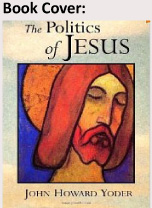
Editors: John H. Yoder (transl. Andries Cilliers)
ISBN: [not available]
Publisher: Lux Verbi BM, Wellington, 2007, p. 352, cost unknown
Reviewer: Hennie J.C. Pieterse (Emeritus Professor) (Department of Practical Theology, University of Pretoria, South Africa)
Email: pietehjc@absa.co.za
Andries van Aarde wrote about the historical Jesus and his social identity as a fatherless person, calling God 'father' (paper read by A.G. van Aarde at the University of Pretoria, 'Public-theological debate - Who was the real Jesus?', 16 October 2008, pp. 12-13):
brought healing for marginalised people in terms of his message about God, acting as father-king in his divine empire ... over against the patriarchal conventions of the powers that were in Jerusalem, Sepphoris/ Tiberias and Rome. Jesus died because of the 'subversiveness' of this 'ethos of compassion ...
This book by Yoder addresses the very implications of Jesus' radical love. Although the author uses New Testament scholarly results of not later than 1972, it is still worthwhile to read this excellent book on Yoder's interpretation of the historical message of Jesus and the implications for an ethical and political understanding of this message. Jesus' kingdom message should not be interpreted as a spiritual kingdom. Jesus made a political choice against the powers of his times. It is an alternative way of life, of non-violent resistance through radical love to the usual (often unjust) political rule, but it is an outspoken political choice. Chapters on the possibility of a messianic ethics, the coming of the kingdom, the option of non-violent resistance, the fact that the disciples of Jesus followed him to the end, and Christ and power, carry a richness of insights for our own situation.
This book makes sense for us today in our own struggle for a peaceful, non-violent and just society in South Africa. It is a great challenge to the churches and to Christians in our situation to start living and witnessing in the spirit of Jesus' kingdom message in our efforts to, inter alia, bring about economic justice.
